I recently walked a pro sports team’s digital lead through FanReach Signals on a live call. We built the whole user experience of favoriting and selecting content preferences in their account while we talked. 30 minutes. Easy. Then we pulled up their app on my phone and I tapped one word: “Off the Ice.”
The “My News” content feed underneath rearranged itself around that one selection. I tapped “Goals,” and it changed again. No custom development. No waiting on an app release. Just a fan telling the app what they care about, and the app listening in real time, personalizing the experience.
Signals are the next massive wave of innovation in pro sports and venue tech. Listen to your fans and deliver, one-to-one. It’s that easy.
Most fan apps still treat every fan the same
Teams and venues have never had more content. Game day series, highlights, player features, behind-the-scenes stories. They’ve also never had more rich data: ticketing, CRM, analytics, marketing automation.
But open most team apps and every fan sees the same home screen, the same content feed, the same promotions and the same ticket offers. The die-hard who follows one player and the casual fan who just wants parking info get the exact same experience.
Almost every digital team I talk to tells me personalization has been on their list for a long time. The gap isn’t ambition. It’s architecture. Resources. And it’s being able to put the data to work.
Personalization feels like a big project: new pipelines, new tools, custom development and a long wait to see if it worked. So it just stays on the wish list. Signals take it off.
What FanReach Signals are
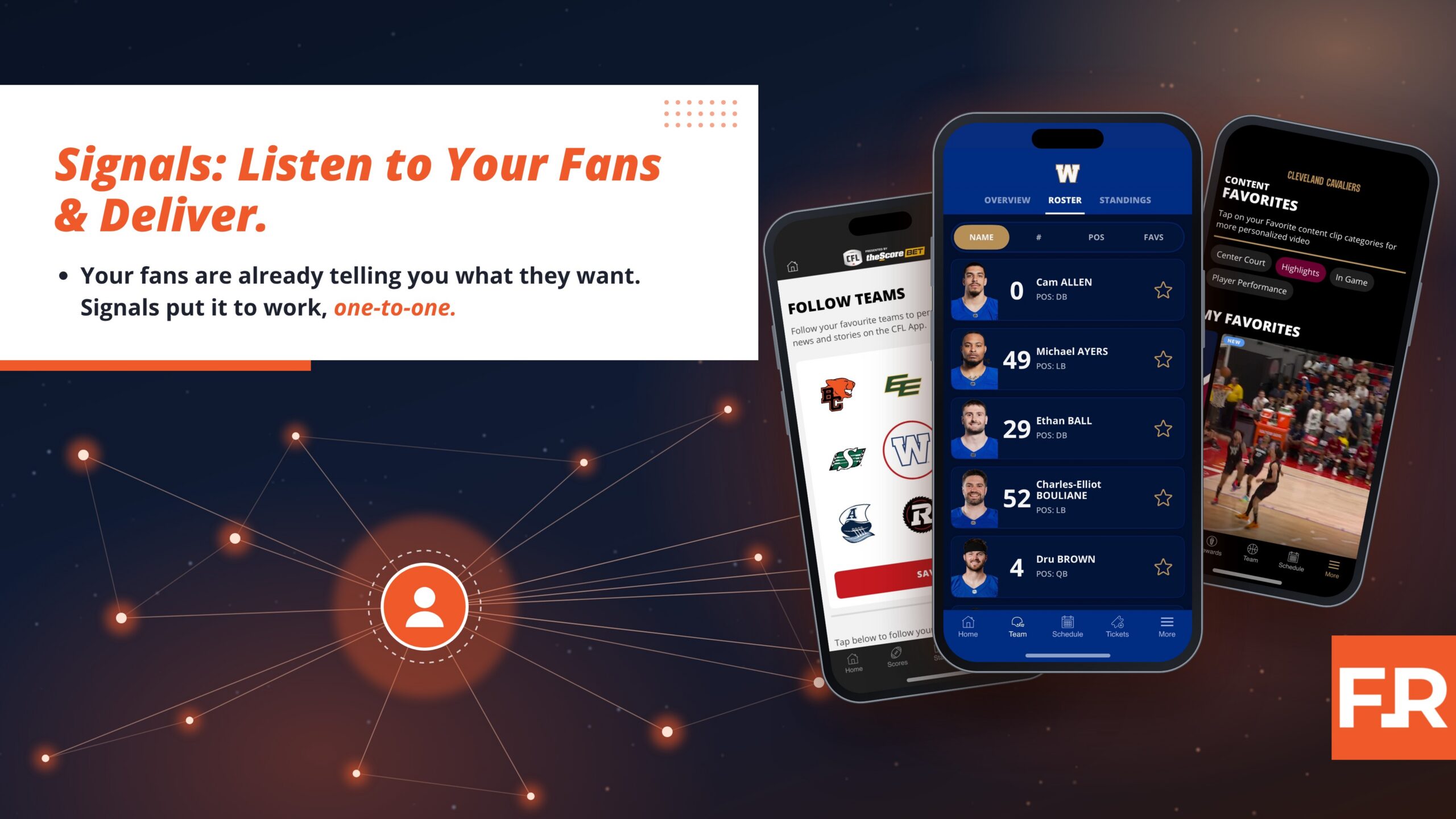
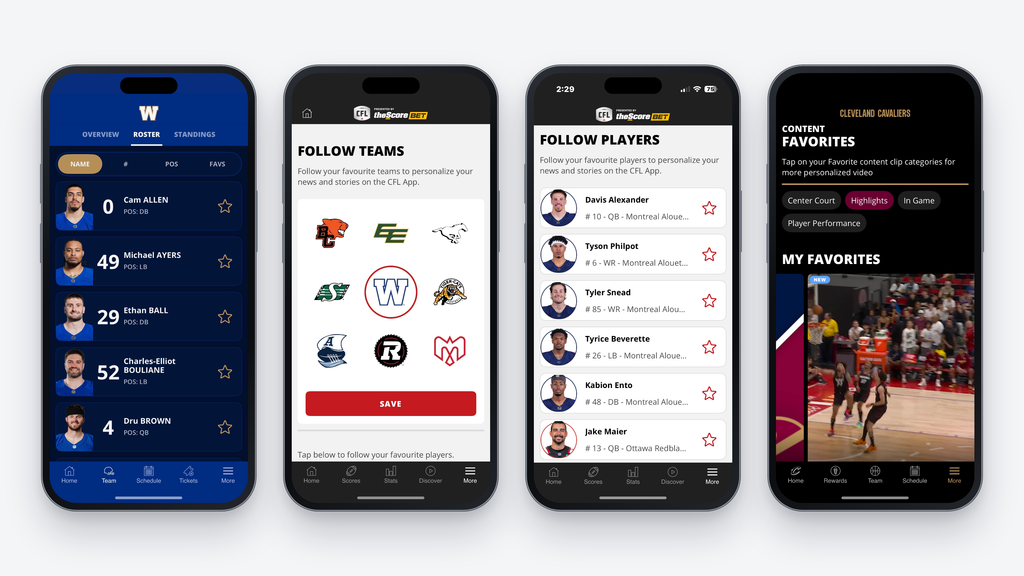
Signals are preference collectors. They’re simple UX blocks you drop onto any screen in your app that let a fan tell you what they love: a favorite player, a favorite content series, a second-favorite team, the kind of tickets they’re shopping for, jerseys over t-shirts, even hot dogs over nachos.
Every tap is saved as an attribute on that fan’s FanReach profile. That’s the whole idea. And because the fan told you directly, it’s the most trustworthy data you’ll ever collect. Some people call it zero-party data. I’m just calling it listening.
Signals come in several looks, such as stars on a roster, thumbnails, word bubbles, thumbs up and toggles. The data is collected the same way every time, so you pick the design that fits the screen and purpose. String a few together on an app screen and you have an entire fan preference center, an onboarding flow or a quick fan survey.
Built live, in one call
We didn’t start from scratch. We started with what the team already had: the stories, videos and series their content team publishes every week. No new content, no new data pipeline, no custom code.
By the end of the call, their app had a brand-new fan preference experience. Fans could pick the content they love and favorite their players, and the app took it from there.
Then came the fun part: the taps I described at the top. Off the Ice, then Game Day and Goals, each one reshaping the feed in real time. I favorited a player, and that preference saved right alongside the others.
That’s the beauty of Signals. The hard part of personalization, connecting what a fan says they love to what they actually see, is already built into the FanReach platform. Your team just decides what to ask.
One tap, put to work everywhere
Here’s where it gets really exciting. A Signal doesn’t just change a news feed. Once it’s saved to a fan’s profile, it works everywhere: across your app, your email, your CRM and even your sponsorships.
Content that feels hand-picked. A fan who favorites your rookie quarterback opens the app to a feed built around him: highlights, interviews, behind-the-scenes. Ask for their second-favorite team, and they get a rivalry feed before the big matchup. Everyone else never sees it.
Offers fans actually want. A fan favorites a player, and the next jersey promo they see is that player’s jersey. A fan who said they’re curious about mini-plans sees mini-plans, not a season ticket pitch. Stack Signals with ticket status or where a fan lives, and your out-of-market superfan gets an offer made just for them.
Sponsors get the audience they’re paying for. Instead of showing every partner to every fan, show the craft beer partner to fans who said they love the beer garden, and the family meal deal to fans who signaled they bring the kids. Interest-based audiences are a far more valuable story to tell a partner.
An app that greets every fan by name. Any text on any screen can speak to the individual fan. Think “Welcome back, Jana, it’s game day. Here’s what’s happening with Tom Brady! And here’s 20% off his jersey too.” (Yes, he’s retired, but I worked for the Patriots for close to two decades and he’s still my go-to example! Ha.)
Every tool you already own gets smarter. Signals flow into Google Analytics, Firebase and marketing platforms like Braze. Your email team can send the rookie QB newsletter only to the fans who favorited him, using the same Signals your app collects.
One preference, collected once, working everywhere. Check out my other recent article, “Stop Storing Fan Data, Put Your Data to Work”!
Why this is the next wave
For years, our industry has invested heavily in collecting data. The next wave is putting that data to work inside the experience fans touch every single day. Signals close that loop, and they move the three things every team and venue cares about.
Affinity. Fans see more of what they love and feel known by their team. That’s how a casual fan becomes a regular.
Engagement. Relevant content gets opened, read and watched. A feed built around a fan’s favorite series is a feed worth coming back to.
Revenue. Every offer, ticket promotion and sponsor activation lands with the fans most likely to say yes. From jerseys and mini-plans to concessions and partner deals, that’s a better experience for the fan and a better result for the team.
There’s a learning loop, too. Every Signal shows up in your analytics, so you can see which players, series and teams fans pick most. That tells your content, merch and partnership teams where to invest next.
And none of this replaces what you’ve already built. Signals fit into your existing stack and make the tools you already pay for smarter.
Crawl, walk, run
At FanReach, we always frame new capabilities as crawl, walk, run. Signals fit that perfectly, and you can start today.
Crawl. Add one Signals block, like favorite players or favorite series, and let it start collecting.
Walk. Connect those favorites to content and audiences: personalized feeds, targeted marketing cards, game day messages that speak to each fan.
Run. Build a full preference center, stack Signals with ticketing and other fan attributes, and send it all to your marketing tools.
Each step builds on the last, and none of them means rebuilding what you have. You can put your existing data to work today!
If personalization has been sitting on your wish list, this is your sign.
I’d love to show you what Signals could look like in your app. Reach out to the FanReach team and let’s build your first one together, live.